Plus-One Etiquette: How to Handle Guests and Plus-Ones on Your Invitations
Few invitation questions generate more quiet anxiety than the plus-one. Hosts worry about appearing ungenerous or, conversely, about opening the door to an unmanageable guest list. Guests wonder whether the omission of a partner's name is deliberate or simply an oversight. Clear etiquette, applied consistently, removes most of the discomfort.
The technology helps, but the underlying decisions remain human.
The Basic Rule
An invitation is addressed to the people who are invited. If a guest's name appears alone, that guest is invited alone. If the invitation is addressed to "Jordan Lee and Guest" or lists a partner by name, a plus-one is welcome. The absence of additional names is traditionally sufficient notice that children or partners are not included, though modern hosts often reinforce the decision with a gentle note on a wedding website or event page.
Consistency matters more than any single rule. Treating similar guests differently creates the impression of favoritism and invites questions the host would rather not answer.
When Plus-Ones Are Expected
Long-term partners, engaged couples, and married spouses are generally included even if the host has never met them. The social contract assumes that a serious relationship travels with the invited guest. Close friends who live far away and would otherwise attend alone also often receive plus-ones, especially for multi-day or destination events where solitude feels more pronounced.
For wedding receptions, many couples extend plus-ones to members of the wedding party as a gesture of appreciation. The same logic can apply to other celebrations when the core group is small and the budget allows.
When Plus-Ones Are Reasonably Declined
Budget and venue capacity are the two most legitimate reasons for limiting plus-ones. A seated dinner with a fixed headcount cannot expand indefinitely. An intimate backyard gathering loses its character if every guest brings a stranger. In these cases, the invitation should be clear from the outset.
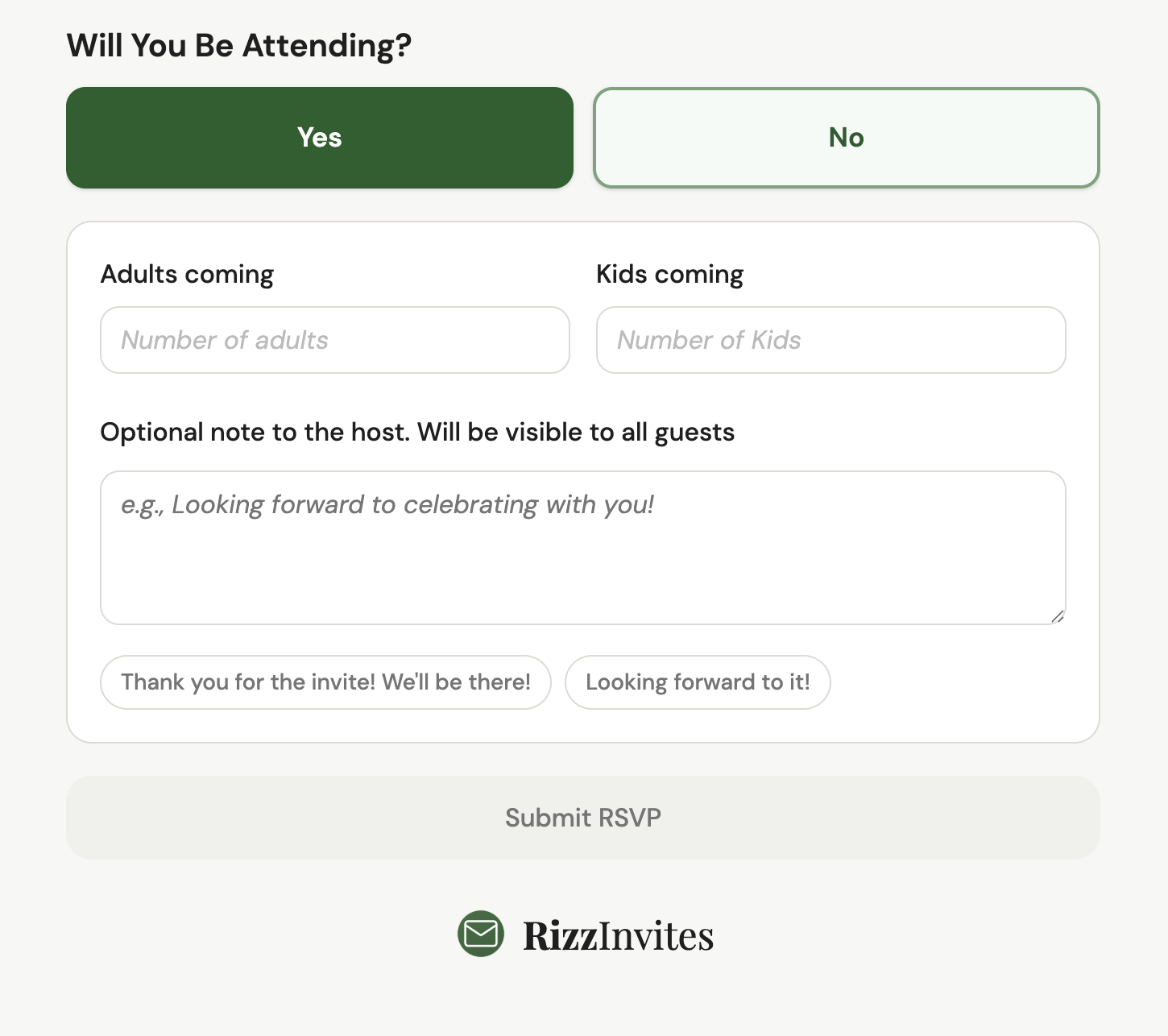
Addressing the invitation solely to the intended guest is the traditional and still effective method. For digital invitations, the platform can simply not offer a plus-one option during RSVP. A short note on the event details page---"We're keeping this gathering intimate and are unable to accommodate additional guests"---prevents most awkward follow-up conversations.
Children present a related but distinct question. "Adults only" celebrations are increasingly common and perfectly acceptable when stated clearly. The invitation itself, by omitting children's names, communicates the policy. Reinforcing it on a website or in a follow-up message for those who inquire is wise.
How to Word the Invitation
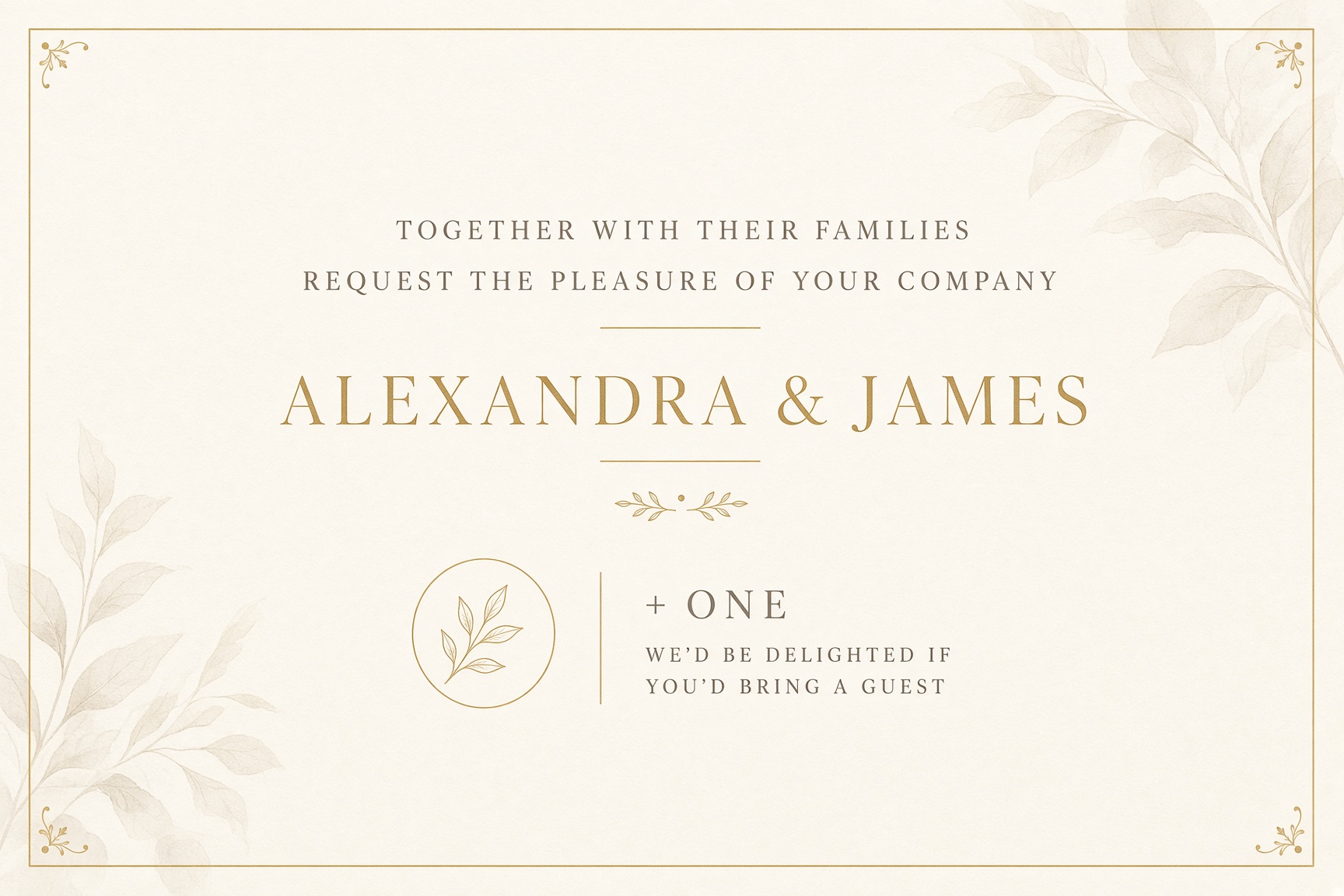
Formal paper invitations rely on the outer envelope and the inner envelope. The outer envelope carries the mailing address; the inner envelope lists exactly who is invited. "Mr. and Mrs. David Chen" signals both partners. "Ms. Elena Vargas and Guest" signals a plus-one. "Ms. Elena Vargas" signals the guest alone.
Digital invitations achieve the same clarity more simply. The recipient field and the RSVP form control the outcome. On platforms such as Rizz Invites, the host can allow or disallow plus-ones at the invitation level. Guests see only the options the host has enabled.
When a partner's name is known, using it is warmer than the generic "and Guest." "Alex Rivera and Sam Ortiz" feels more personal than "Alex Rivera and Guest."
Handling Requests and Exceptions
Despite clear invitations, some guests will ask. A gracious but firm response protects the host's boundaries without damaging the relationship. "We're so glad you can come. Because of space limitations we've had to keep the guest list to those named on the invitation" is usually sufficient. Offering a specific reason---venue capacity, budget, or the desire for an intimate atmosphere---makes the decision feel less arbitrary.
Exceptions should be rare and principled. Making an exception for one friend while denying another creates more difficulty than it solves. If a genuine hardship exists--- a guest who would otherwise be unable to attend because of travel or caregiving responsibilities---the host can choose to stretch, but the stretch should be intentional rather than reactive.
Special Cases
Destination Events
Guests traveling significant distances often appreciate a plus-one more than local guests. Many hosts extend the option more liberally for destination weddings and multi-day celebrations.
Workplace and Large Social Circles
Inviting colleagues or members of a large friend group without plus-ones is common and accepted. The professional or group context supplies its own logic.
Single Guests at Couple-Heavy Events
Some hosts worry that single guests will feel isolated. The solution is usually better seating and thoughtful introductions rather than automatic plus-ones. A well-planned event makes every guest feel included regardless of relationship status.
Cultural and Generational Differences
Expectations around plus-ones are not universal. In some communities and age groups, bringing an uninvited companion is still common and rarely questioned. In others, the invitation is treated as a precise contract. Hosts planning multi-generational or cross-cultural events should anticipate these differences and communicate with extra clarity. A brief explanatory note on the event page or a personal conversation with key guests can prevent misunderstandings that would otherwise surface only on the day of the party.
Younger guests, particularly those in their twenties, often assume plus-ones are flexible unless told otherwise. Older guests may wait for explicit permission. Addressing both tendencies in the invitation language itself reduces friction.
The Larger Principle
Plus-one etiquette is ultimately about respect in both directions. The host respects the guest by being clear and consistent. The guest respects the host by accepting the boundaries of the invitation. When both sides operate from that understanding, the celebration itself remains the focus rather than becoming a negotiation over attendance rules.
Digital tools have made the mechanics easier. Hosts can set the policy once, communicate it cleanly, and collect exact names and counts without awkward follow-up texts. Guests see only the options the host has enabled, which removes ambiguity at the point of response. For those ready to manage invitations with that level of precision, Rizz Invites provides a platform designed around clarity---from the first design choice through the final reminder the day before the event. The result is fewer last-minute surprises and a guest list that matches the host's original vision.
Also Read About: How To Write No Gifts On A Birthday Invitation