Digital Invitations vs. Paper: Which Is Better for Modern Parties?
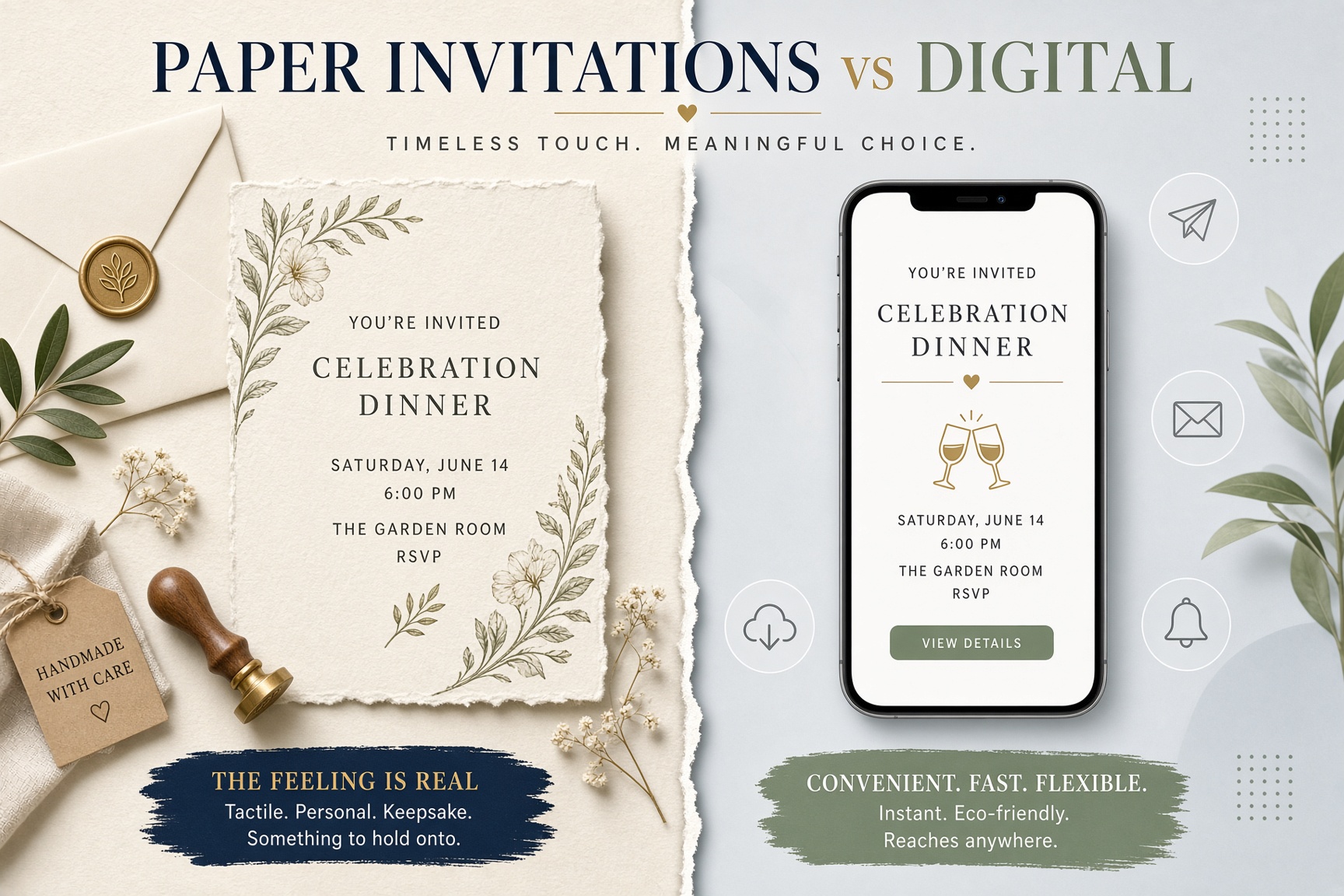
The debate between digital and paper invitations is no longer purely aesthetic. It is practical, financial, and environmental. Hosts weigh speed against sentiment, cost against tradition, and convenience against the tangible pleasure of opening an envelope. Both formats have enduring strengths. The question is not which is universally superior, but which serves a particular event and a particular group of guests most effectively.
Rizz Invites entered this conversation when it launched as Birthday Rizz in February 2026 and later expanded into a comprehensive digital invitation platform. The service allows hosts to create invitations with AI or upload their own designs, deliver them by text or email, track RSVPs in one place, and send automatic reminders the day before the event. Pricing is one-time and scales with guest count: free for up to ten, $14.99 for up to fifty, $29.99 for fifty-one to one hundred fifty, and $64.99 for larger parties. No advertisements appear on the invitations or the response pages. Understanding the broader comparison helps hosts decide when such a platform is the right choice.
The Case for Paper Invitations
Paper carries weight---literally and metaphorically. A well-designed card arriving in the mail signals that the event is significant enough to warrant physical production. Guests often keep formal wedding invitations as keepsakes. The tactile experience of thick stock, letterpress, or foil stamping creates a moment of ceremony before the celebration itself begins.
Paper also reaches guests who are less comfortable with digital tools or who simply prefer not to manage another app or email thread. For older relatives or formal institutional events, a physical invitation can feel more respectful.
The drawbacks are equally clear. Production takes time. Printing, addressing, stamping, and mailing can consume weeks and hundreds of dollars for larger guest lists. Changes after printing are expensive or impossible. Tracking responses requires manual effort or the return of physical RSVP cards. Environmental considerations matter to many hosts: the paper, the ink, and the transportation all leave a footprint.
The Case for Digital Invitations
Digital invitations excel at speed, flexibility, and cost. A host can finalize design and wording in an afternoon and send the same day. Guest lists can be adjusted until the moment of delivery. Responses arrive instantly and can be viewed in a single dashboard. Dietary preferences, song requests, and plus-one details can be collected automatically.
Cost differences are substantial. Even high-end digital platforms charge a fraction of the price of letterpress or offset printing for comparable guest counts. For events larger than a few dozen people, the savings become decisive.
Environmental impact is generally lower, though not zero---servers and data transmission consume energy. Still, the absence of physical materials and shipping represents a meaningful reduction for most celebrations.
Modern platforms have closed many of the earlier gaps in quality. High-resolution AI-generated designs or uploaded custom artwork can look as polished as printed cards when viewed on a phone or tablet. The best systems also handle delivery across both text and email, increasing the chance that the invitation is actually seen.
When Paper Still Wins
Certain occasions continue to favor paper. Black-tie weddings with traditional guest lists often benefit from the formality of a physical suite. Milestone anniversaries, formal institutional dinners, and events where keepsakes are expected also lean toward print. When the majority of guests are older and less digitally fluent, paper remains the more inclusive choice.
Hybrid approaches have become common. Couples may send paper save-the-dates and digital formal invitations, or vice versa. The key is consistency of tone and clarity of information.
When Digital Is the Clearer Choice
Most contemporary parties fall into the digital category. Birthday celebrations, baby showers, graduations, casual weddings, housewarmings, and corporate gatherings all benefit from rapid creation, easy updates, and real-time response tracking. When the guest list includes many people whose contact information is incomplete---classroom parties, large extended families, or community events---a shareable event link becomes invaluable. Guests simply open the link, enter their name and the number attending, and the host receives an accurate count.
Digital platforms also solve the reminder problem. An automatic message the day before the event dramatically reduces the number of guests who intended to come but forgot. Paper invitations require the host to manage that follow-up manually.
Practical Comparison Points
Speed of creation and delivery
Digital: hours. Paper: days to weeks.
Cost at scale
Digital: low and predictable. Paper: rises steeply with quantity and
print quality.
Ability to update details
Digital: immediate. Paper: requires reprints or inserts.
Response tracking
Digital: automatic and centralized. Paper: manual.
Keepsake value
Paper: high. Digital: low, unless the host provides a downloadable
version.
Inclusivity for less tech-savvy guests
Paper: stronger. Digital: improving with simple text and email delivery.
The Hybrid Option
Many hosts no longer treat the choice as binary. A paper save-the-date followed by a digital formal invitation, or a digital invitation accompanied by a printed keepsake for the closest family, allows the strengths of each format to complement the other. The digital version handles logistics and responses; the paper version satisfies the desire for something tangible. Consistency of design language across both pieces keeps the overall presentation coherent.
This approach works especially well for weddings and major milestone celebrations where tradition and practicality both matter. The key is deciding early which elements will be physical and which will be digital so that neither feels like an afterthought.
Making the Decision
Begin with the guest list and the nature of the event. If the celebration is formal, the guest list skews older, and budget allows, paper retains its place. For nearly every other scenario, digital invitations offer superior practicality without sacrificing beauty. Consider also the environmental values of the hosts and guests, the need for rapid updates, and the importance of accurate real-time counts.
The rise of platforms that combine elegant design tools with reliable delivery and clean pricing has shifted the balance. Hosts no longer have to choose between looking polished and managing logistics efficiently. On Rizz Invites, the invitation can be created with cutting-edge AI, refined to the host's exact wording, delivered by the methods guests actually use, and tracked without spreadsheets or lost cards. Guests receive a clean experience free of advertisements, and hosts receive the data they need to plan with confidence.
The best invitation, whether digital or paper, is the one that makes the guest feel wanted and the host feel organized. In 2026, for the majority of celebrations, that invitation is increasingly digital---and the parties that follow are better for it.
Also Read About: Why SMS Birthday Invitations Get 5X More RSVPs Than Email