How Many People Should You Invite to a Birthday Party? A Guest-Count Guide by Age
You've picked the date. Maybe you've even picked the theme. Then you open a blank note on your phone to start the guest list and freeze: is eight kids enough? Is twenty too many? Does the baby's first birthday need the whole neighborhood?
There's no single right number, but there are some very reliable starting points. This guide covers how many people to invite to a birthday party at every age, from a first birthday to a 40th. You'll find the "age plus one" rule (and when to ignore it), a guest-count chart by age, how venues and budgets change the math, and how to plan for the people who say yes and then don't show up.
If you're still deciding who makes the list, such as classmates, siblings, or the teacher, our guide to whether you have to invite the whole class covers that side. This one is all about the number.
The "Age Plus One" Rule, and When to Break It
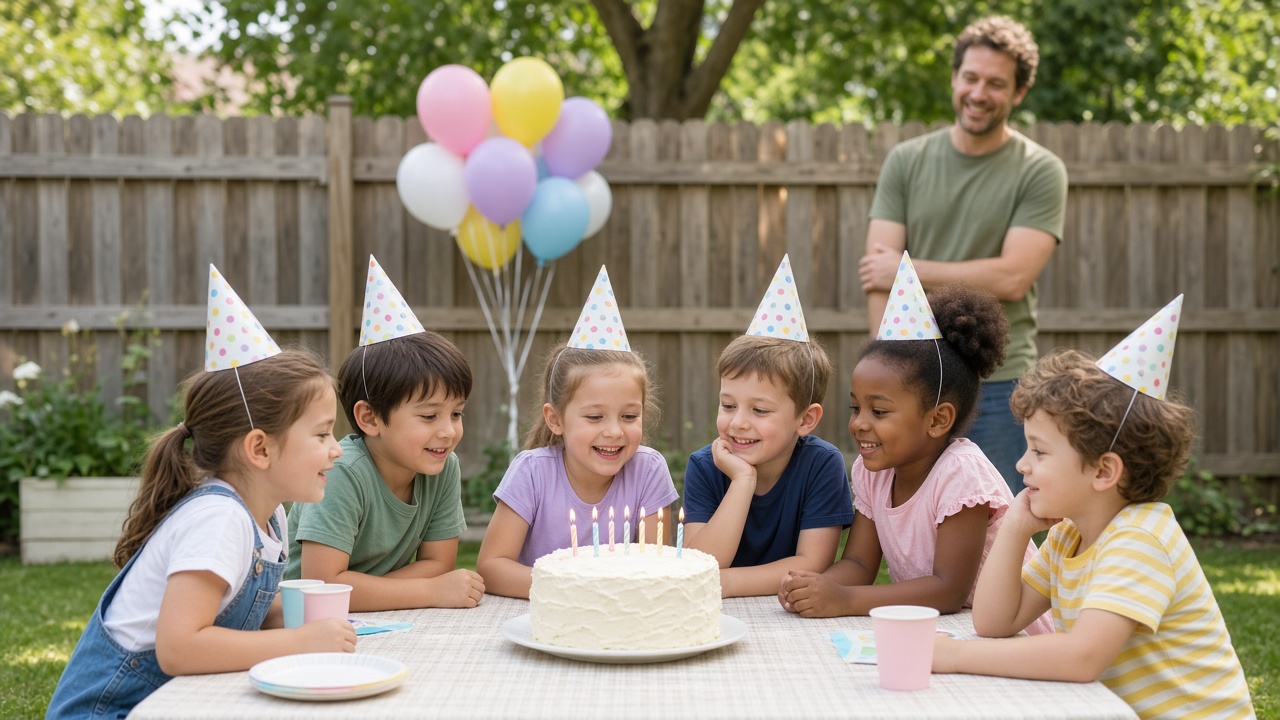
The best-known guideline for kids' parties is simple: invite as many children as the birthday child is turning, plus one. A child turning four invites five friends, and a child turning eight invites nine.
The rule works because it grows with your child's social world. A toddler has a couple of buddies, a third grader has a real friend group, and the guest list keeps pace without you overthinking it. It also keeps the party small enough for one or two adults to run.
That said, treat it as a starting point, not a law. Here's when to set it aside:
- When your child's class is small. If there are 12 kids in the class and your child is turning six, inviting seven leaves five out. Inviting the whole group may be kinder and simpler.
- When the venue includes a set number. If a party package covers 12 kids, you might as well use all 12 spots.
- When the party is outdoors. A park or big backyard can easily handle double the "age plus one" number.
- When your child is shy or easily overwhelmed. Going smaller, even three or four close friends, can make for a much happier birthday kid.
- For teens. By 13 or 14, the formula stops being useful. Teens tend to want either a tight group for an outing or a big crowd for a milestone birthday.
A good gut check: count the adults. For kids under six, plan on at least one adult for every four or five children, and expect many parents to stay. For ages six to ten, one adult for every six to eight kids is a comfortable ratio.
Guest Count by Age
Use this chart as a quick reference, then adjust for your space, your budget, and your child's personality.
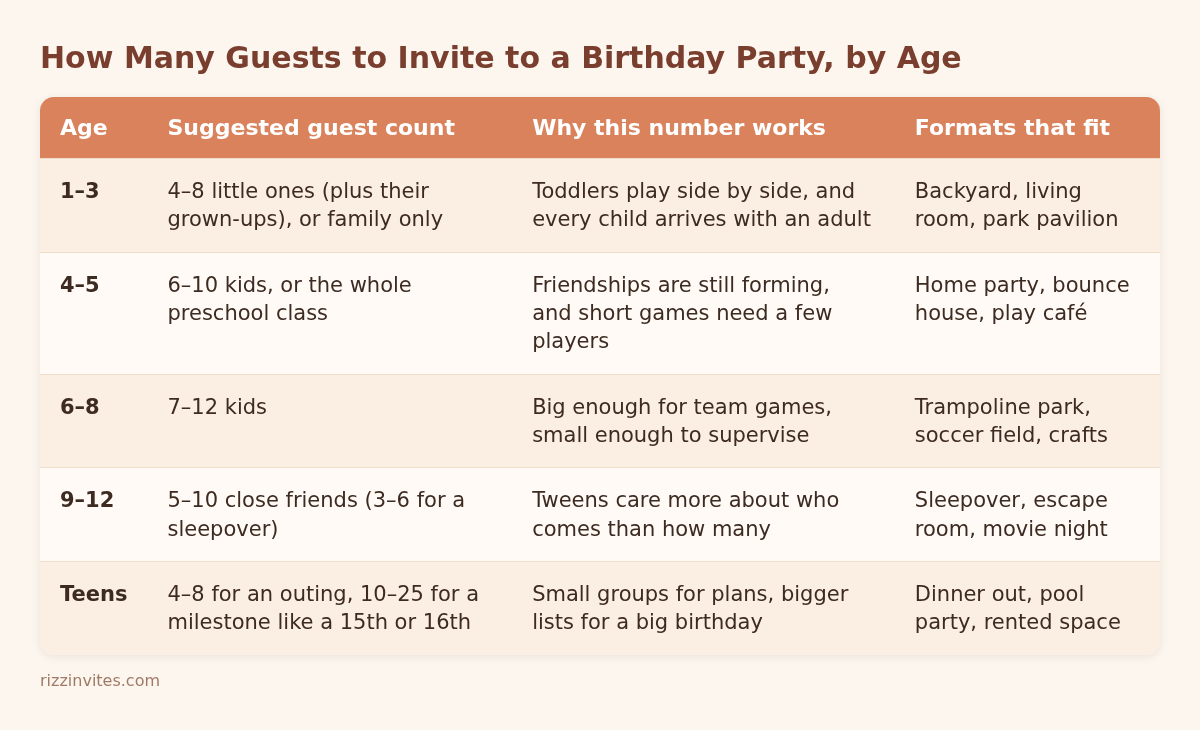
A few notes on each age group:
Ages 1 to 3. Young toddlers don't really play together yet, and every child comes with at least one parent. That means four toddler guests can easily become 12 or more people in your living room. Keep the kid count low and plan food for the grown-ups.
Ages 4 and 5. This is when kids start asking for "everyone." Preschool and kindergarten friendships change week to week, so many families either keep it to six to ten or invite the whole class. For a kindergarten-age party, our 5th birthday invitations make it easy to send one link to a whole group of parents.
Ages 6 to 8. This is peak birthday party age. Kids can follow game rules, love an activity, and usually have a clear friend group. Seven to twelve guests lets you run team games or relay races without chaos. Active kids often love a field party; our soccer birthday invitations are a fun fit if you're planning a backyard scrimmage.
Ages 9 to 12. Tweens care much more about who than how many. Five to ten close friends is typical, and sleepovers work best with three to six. A 9-year-old who's into gaming might want a small party; a sports fan might want the whole team. Browse our 9th birthday invitations for designs that feel a little more grown-up.
Teens. For a casual birthday, teens often want a small group of four to eight for dinner, a movie, or an escape room. Milestone birthdays are different. A 13th, a quinceañera, or a sweet 16 can easily reach 25 or more guests. For a 15th, our 15th birthday party invitations work for both small celebrations and big ones.
First Birthday Guest Lists: Family First
The first birthday is really a party for the parents, and the baby's guest list looks very different from any other year. The guest of honor won't remember it and may need a nap halfway through.
Start with family. Grandparents, aunts, uncles, and cousins come first. For many families, that alone is 10 to 20 people.
Add close friends, especially ones with babies. A few friends with little ones the same age make for sweet photos and a relaxed vibe. Two to five baby guests is plenty.
Keep it manageable for a one-year-old. A typical first birthday has about 10 to 25 total guests, adults included. Much more than that and your baby may be overwhelmed by noise, strangers, and being passed around.
Time it around naps. Schedule a two-hour party after the morning nap or after the afternoon nap, and the guest of honor will be far happier.
Consider two smaller parties. If both sides of the family are large or live in different places, a small family celebration plus a separate gathering for friends can be easier than one big party.
Our first birthday invitations are made for sending to a mix of grandparents, relatives, and new-parent friends.
How Venue and Budget Change the Number
Where you hold the party often decides the guest count for you.
At home. Your space is the limit. A good rule of thumb is to look at the room where most of the party will happen and imagine everyone sitting down for cake. Indoors, most homes comfortably fit 8 to 12 kids. Backyards can handle more, but plan a rain backup.
Bounce house rentals. A standard backyard bounce house safely holds about four to eight young kids at a time, depending on its size and the kids' ages. Check the rental's rules. If you're inviting 15 kids, plan for turns and a second activity to keep the line moving. Our bounce house birthday invitations let you add notes like "socks required" or "bring a change of clothes."
Trampoline parks and play spaces. Most packages include a base number of jumpers, often 10 to 15, with a fee for each additional child and a waiver for every kid. Build your list around the package size. If the base covers 12, inviting 15 usually lands right around 12 after RSVPs. See our trampoline park birthday invitations for designs that remind parents about waivers and grip socks.
Parks and pavilions. These are the most flexible and the most budget-friendly. You can invite a bigger group without per-child fees, though some parks require a permit or reservation for large groups.
Restaurants and activity venues. Escape rooms, pottery studios, and bowling alleys have hard limits. Ask about the maximum group size before you invite anyone.
Setting a budget per guest. Figure out the cost per child (food, favors, venue fees, activity), then divide your budget by that number. If you have $300 and each child costs about $25, that's 12 guests, including the birthday kid. Remember to budget for siblings who tag along and for adults who stay, especially at younger ages.
Planning for RSVPs and No-Shows
Not everyone you invite will come, and not everyone who says yes will show up. A little planning keeps you from over-buying pizza or running out of goody bags.
Expect about 60 to 75 percent of invited kids to attend a close-friends party. For a class-wide invitation or a busy holiday weekend, turnout often drops closer to half. If your capacity is 12, inviting around 15 to 16 is usually safe.
Set a clear RSVP date. One week before the party works for most home parties. For venues that need a final count, set it 10 to 14 days ahead.
Follow up once, politely. A quick, friendly text two or three days before the deadline catches most of the stragglers: "Hi! Just finalizing numbers for Ella's party on Saturday. Will Max be able to make it?"
Plan for one or two surprises. Prepare one or two extra favors, slices of cake, and seats, both for last-minute yeses and for siblings who come along.
Use digital RSVPs. Online invitations make it easy to see who's coming, who hasn't answered, and who's bringing a sibling, all in one list. With Rizz Invites, you can send by text or email, and guests reply with one tap. Small parties of 10 or fewer are free, and a bigger list is a single payment per invite ($14.99 for as many as 50 guests, or $29.99 for 150), never a subscription.
Adult Birthday Guest Counts
Adult birthdays don't come with a formula, but the kind of party you're planning usually narrows the number down quickly.
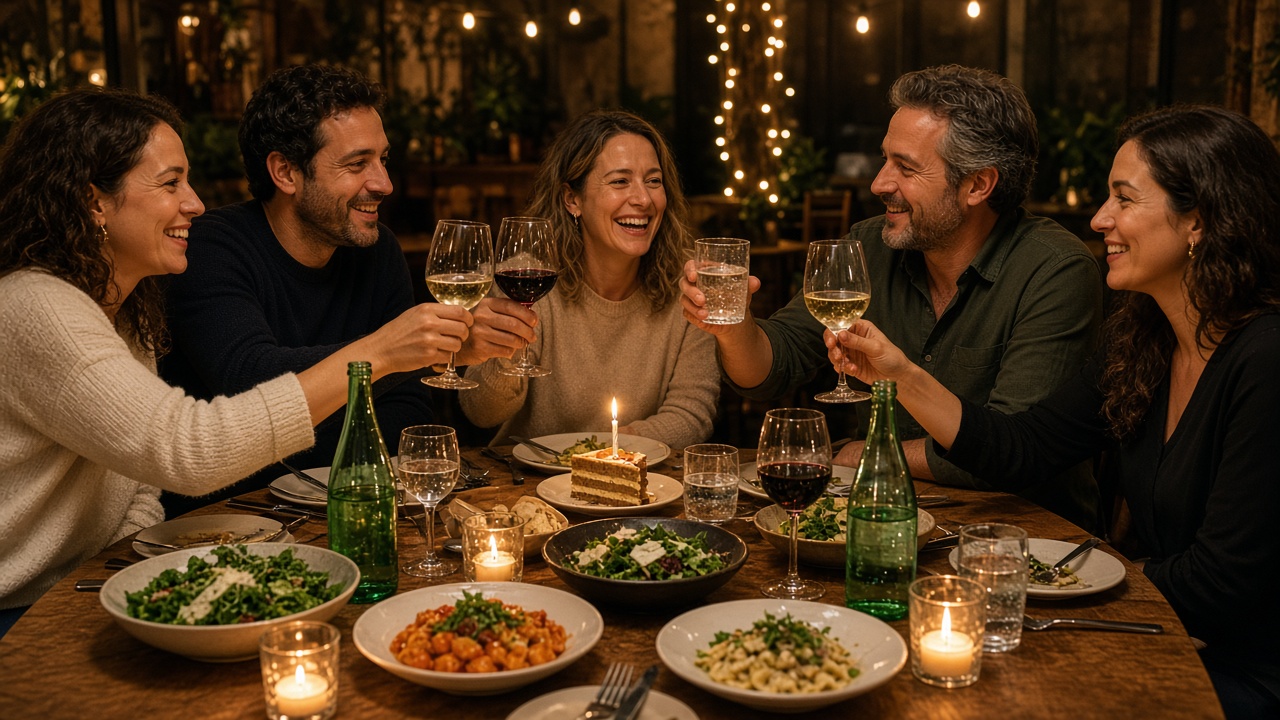
- Birthday dinner at a restaurant: 6 to 12 guests. Beyond that, conversation splits into separate tables and the bill gets harder to manage.
- House party: 15 to 30 guests is a lively range for most homes. Count on about 70 to 80 percent of invited adults to come.
- Milestone birthday (30th, 40th, 50th): 30 to 75 guests is common, especially when family, coworkers, and old friends all join in.
- Weekend trip or experience: 4 to 10 people, since lodging and logistics get tricky past that.
Plus-ones change everything. If you allow guests to bring a partner, your count can nearly double. Decide before you send invitations, and be clear about it.
For a grown-up celebration, browse our adult birthday invitations, which are made for everything from small dinners to big milestone parties.
Frequently Asked Questions
How many people should I invite to my child's birthday party? A common guideline is the child's age plus one. From there, adjust based on your space, budget, and whether you're inviting the whole class.
What's a good guest count for a 5-year-old's party? Usually six to ten kids, or the whole preschool or kindergarten class if your space allows.
How many people should I invite to a first birthday party? Most first birthday parties have 10 to 25 guests, mostly family and close friends. Keep the number of babies and toddlers small.
How many kids say yes to a birthday party invitation? Typically 60 to 75 percent for a small friends party, and closer to half for a whole-class invitation. Plan your list so you won't go over capacity if everyone comes.
How many people should I invite to an adult birthday party? For a dinner, 6 to 12 people. For a house party, 15 to 30. For a milestone birthday, 30 or more is common.
What if more people RSVP than I planned for? Have one or two extra favors and portions ready. If you're near a venue limit, ask the venue about adding spots early.
Ready to send your list? Pick a design for your child's age or theme, send it by text or email, and watch the RSVPs come in.