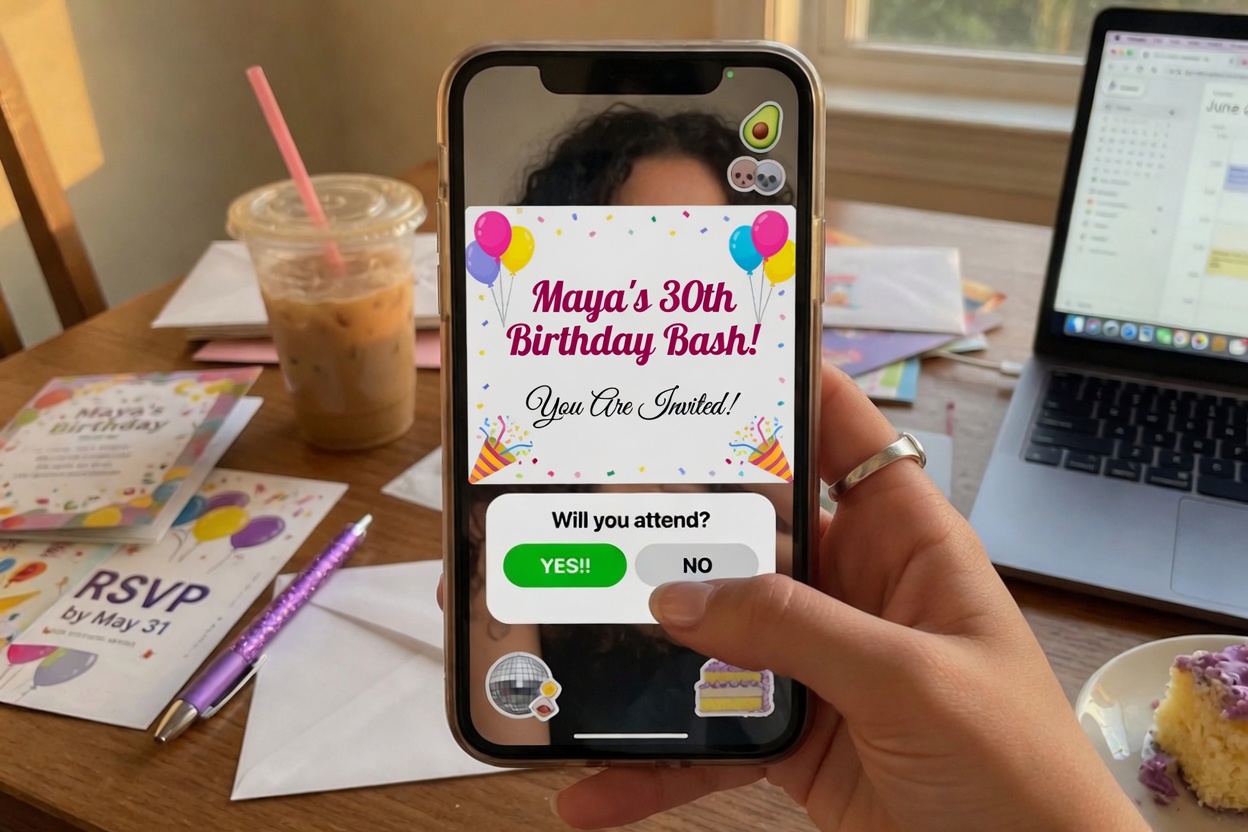
AI Is Killing the Party Invitation Template—and Nearly One in Four Hosts Have Already Gone Custom
For years, digital invitations followed a simple formula: choose a template, change the date, add the address, and send it.
That formula still works. But a growing share of hosts no longer wants an invitation that looks as though it came from the same shelf as everyone else’s.
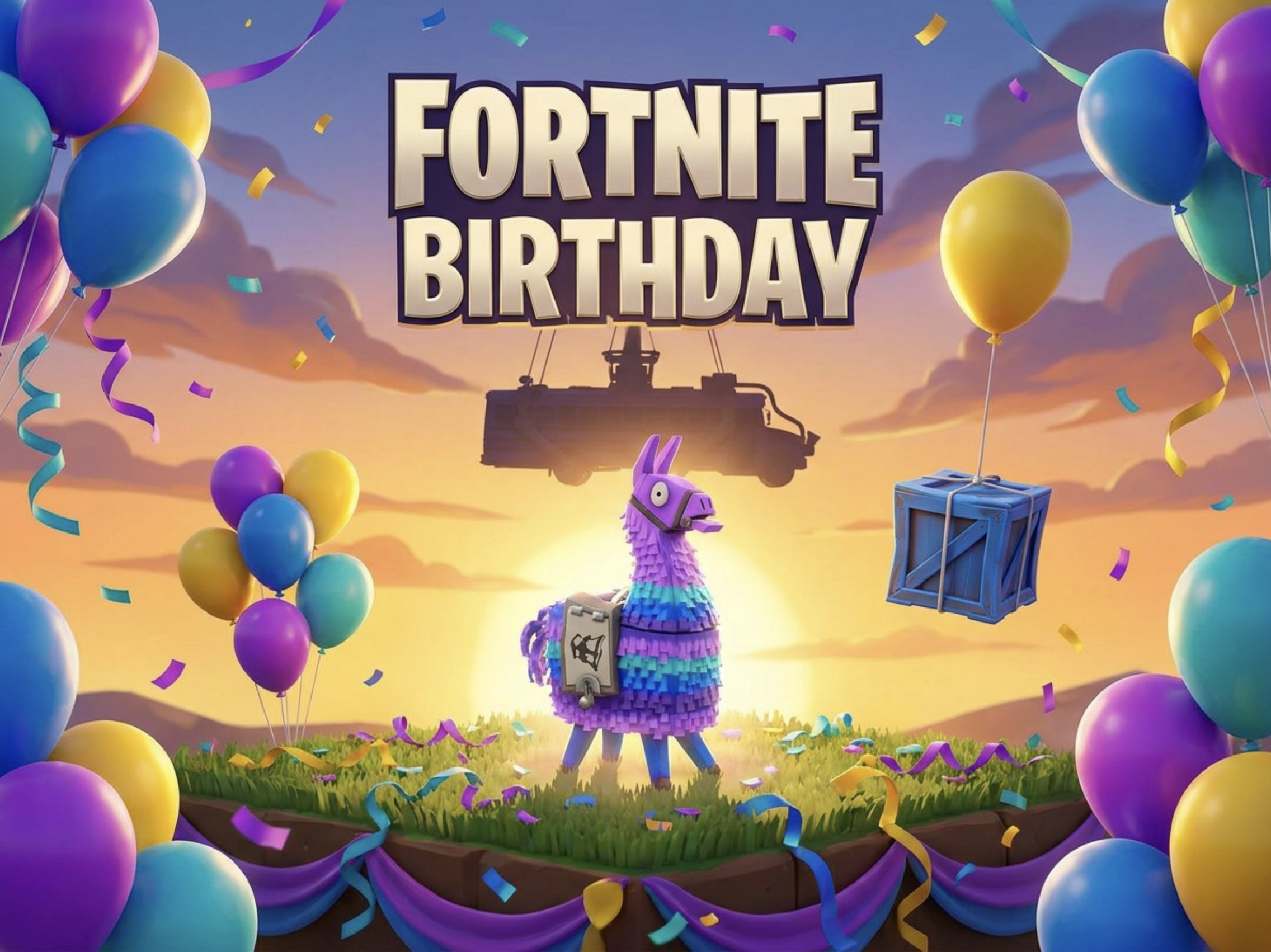
According to Rizz Invites data twenty-four percent of all party hosts chose either a Custom Upload or Custom Generation option. Nearly one in four decided not to begin with a conventional, ready-made design. They arrived with something of their own—or asked technology to create something specifically for them.
That is a meaningful shift.
The invitation is the opening scene of an event. It tells guests whether the party will be elegant or chaotic, intimate or extravagant, sentimental or absurd. Yet until recently, creating something original required design skill, money, time, or access to someone who had all three.
AI may be changing that equation.
Custom No Longer Means Complicated
Not long ago, “custom invitation” usually meant spending an hour or more working with a design tool, applying revisions, approving a final file, and figuring out how to distribute it. The result could be beautiful, but the process was too involved for an ordinary birthday dinner, backyard graduation, baby shower, or last-minute celebration.
Today, those barriers are collapsing.
A host can upload a child’s drawing, a favorite photograph, a Canva design, commissioned artwork, or a graphic generated by AI. Someone with no formal design experience can describe “a glamorous disco cowgirl birthday in pink and silver” and receive a visual concept in seconds.
That does not make everyone a designer. It does, however, let far more people begin with an idea instead of a template.
Templates ask users to select from what already exists. Custom generation asks them to imagine what should exist.
Is AI the Culprit?
Probably—but “culprit” may be the wrong word.
AI did not create the desire for personalization. People have always wanted parties to feel like their parties. Parents search for decorations matching a child’s highly specific obsession. Couples want wedding materials that reflect their story. Friends fill invitations with inside jokes, embarrassing photographs, and references that make sense only to the guest list.
What AI has done is make that instinct easier to act on.
The demand was already there. The production capacity was not.
Generative tools have reduced the distance between an idea and a usable image. Instead of scrolling through hundreds of designs hoping to find one that is close enough, a host can attempt to create the exact concept in their head.
The result may be elegant, strange, hilarious, ambitious, or imperfect—but it is theirs.
AI is therefore less the creator of the custom-invitation trend than its accelerant. It gives ordinary users access to a process that once belonged primarily to designers and skilled hobbyists.
Party Hosts Are Becoming Creative Directors
Modern consumers are increasingly comfortable assembling a visual identity for even the smallest moments.
They choose a color palette for a first birthday, coordinate balloons with table settings, build Pinterest boards for dinner parties, and select a dress code, playlist, cake style, and photo backdrop.
The invitation is no longer merely a logistical notice. It is part of the event’s creative system.
That helps explain the appeal of custom invitations. A standard template may be beautiful, but it still asks the party to conform to the design. A custom invitation lets the design conform to the party.
This matters when the theme is unusually specific.
There may be hundreds of “princess” invitations, but few for a “space princess roller-skating breakfast.” There may be countless graduation templates, but none built around the graduate’s exact school colors, favorite saying, and childhood photograph.
There may be dozens of dinner-party invitations, but none that capture the host’s desired combination of old-world glamour, Italian food, and unserious humor.
Customization thrives in the gap between broad categories and real human specificity.
Social Media Raised the Standard
AI is only part of the story. Social media has also changed what people expect an event to look like.
Hosts see elaborate balloon installations, themed dessert tables, cinematic wedding details, coordinated favors, handwritten menus, and parties built around concepts that would have seemed excessive a decade ago. Even when people do not reproduce those events, the exposure changes their sense of possibility.
A party can now have a “look,” even when it takes place in a living room. A casual dinner can carry one visual joke from invitation to menu. A retirement party can resemble a vintage travel campaign. A backyard gathering can borrow the language of a luxury music festival.
The invitation is often the easiest place to establish that identity. It is relatively inexpensive, highly visible, and seen by every guest before the event begins.
Hosts are not only communicating information. They are setting expectations and creating anticipation.
Uploading and Generating Serve Different Instincts
Custom Upload and Custom Generation may appear similar, but they reflect different behaviors.
Custom Upload appeals to people who already have an asset. They may have used AI they are familiar with, built a design in Canva or elsewhere, received artwork from a friend, or created something themselves. Their priority is control: they want the invitation platform to preserve the design they have already chosen.
Custom Generation appeals to people who have an idea but not yet an image. Their priority is possibility: they want help turning a theme, mood, phrase, or joke into something visual.
One begins with a file. The other begins with imagination.
Together, they represent a movement away from passive selection. The host is not simply shopping among finished options. The host is participating in the creation process.
That participation can create a stronger attachment to the final invitation, even when the result is not technically perfect. A custom design becomes a small artifact of the event rather than a disposable wrapper around its details.
Templates Are Not Disappearing
None of this means the traditional invitation template is doomed.
Templates remain ideal for hosts who want speed, confidence, and professional polish. Many people do not want to art-direct a birthday invitation at 11:30 at night. They want something attractive, appropriate, and ready to send.
The future is not “custom replaces templates.” It is a spectrum.
At one end, users select a finished design and change only the event information. In the middle, they personalize colors, photographs, fonts, and wording. At the other end, they upload or generate the entire visual concept.
The important change is that more users expect access to the whole spectrum.
The same person may choose a template for a neighborhood barbecue, generate something ridiculous for a friend’s birthday, and upload professionally designed artwork for a wedding.
Convenience and originality are not opposing consumer groups. They are different needs that can appear within the same person, depending on the event.
The Invitation Is Becoming Self-Expression
The most interesting part of the 24% figure is not that people discovered another design feature. It is that a substantial group of party hosts now sees the invitation as something worth making their own.
This reflects a larger shift in digital behavior. People increasingly expect software to adapt to their intent rather than forcing their intent into preset boxes. They want a template when they are rushed and a blank canvas when inspiration strikes.
AI makes that flexibility practical.
It allows someone to move from “I wish an invitation like this existed” to “Here are six versions” in moments. It makes niche ideas viable because no company has to predict every possible theme in advance. It expands the visual vocabulary available to people who would never describe themselves as creative professionals.
Most importantly, AI gives hosts permission to start with their own idea, however specific or unusual it may be.
Nearly one in four party hosts choosing Custom Upload or Custom Generation suggests that originality is no longer a fringe preference. It is becoming a mainstream expectation.
The age of selecting the least-wrong template is giving way to something more personal: invitations built around the event, the host, and the strange little details that make a gathering memorable.
AI may be the culprit.
But the real cause is simpler.
People finally have an easy way to make the invitation they wanted all along.